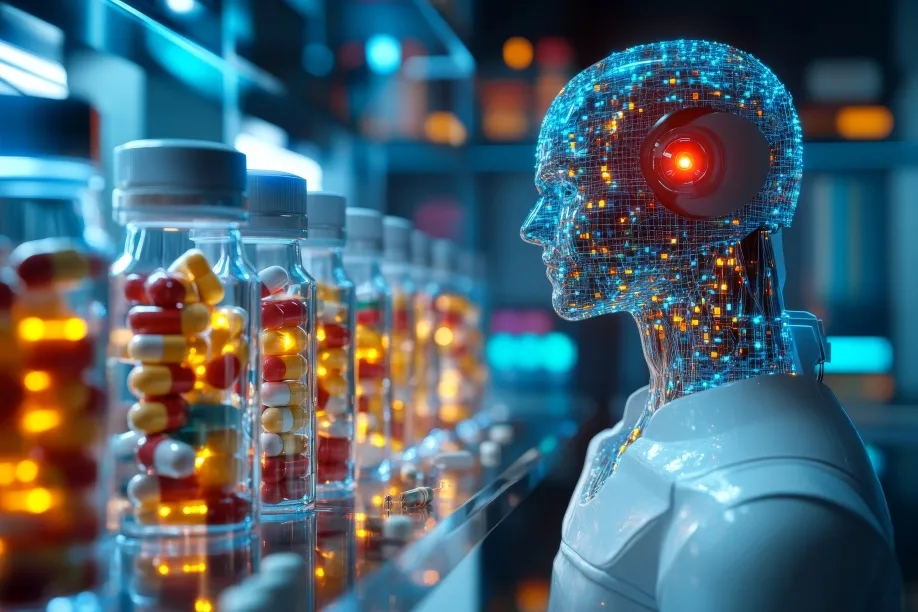
On average, developing a single new medicine can take more than a decade and cost billions of dollars with most drug candidates failing before reaching clinical trials. To overcome these challenges, World BI provides a platform where researchers have explored computational chemistry, automation, and machine learning for years and present in Drug Discovery Innovation Programme.
Now, a revolutionary shift is underway the rise of Agentic Artificial Intelligence (AI). Unlike conventional AI tools that assist with specific tasks, agentic AI systems can act autonomously, reason across multiple stages, and learn continuously. They are not just analytical tools they are digital decision-makers capable of designing, planning, and executing workflows from concept to compound. This evolution marks the beginning of an era where laboratories are becoming intelligent collaborators in discovery.
What is Agentic AI in Drug Discovery?
Agentic AI refers to autonomous systems that perform reasoning, decision-making, and multi-step task execution with minimal human supervision. Unlike static predictive models, these intelligent agents can connect different parts of the discovery process from identifying biological targets to designing, synthesising, and testing molecules.
Key Characteristics of Agentic AI Include:
- Autonomy: Ability to plan and act independently in experimental workflows.
- Iterative learning: Systems that continuously improve through feedback loops.
- Goal-oriented reasoning: AI agents optimise decisions based on defined objectives such as potency or safety.
- Integration: Seamless connection between computational prediction and real-world laboratory execution.
Agentic AI essentially functions as a digital scientist, managing the entire Design–Make–Test–Learn (DMTL) cycle, the backbone of modern drug discovery pipelines.
How Autonomous Workflows are Transforming the Lab
The convergence of agentic AI, robotics, and cloud-based automation has given birth to self-driving laboratories environments where intelligent agents orchestrate experiments, analyse results, and refine hypotheses automatically.
Major Transformations Include:
- End-to-end automation: AI can design molecules, command robotic synthesis, and evaluate biological activity.
- Closed-loop optimisation: Data from each experiment is instantly analysed and fed back into the system for improvement.
- Parallel processing: Multiple AI agents can simultaneously perform target analysis, screening, and design.
- Reduced human error: Automated systems minimise inconsistencies and experimental bias.
- Scalable experimentation: Thousands of compounds can now be tested within days rather than months.
In such labs, scientists evolve from manual experimenters to strategic supervisors, focusing on creativity, critical reasoning, and ethical guidance.
Technologies Powering Agentic AI
A set of cutting-edge technologies fuels this autonomous transformation across the drug discovery ecosystem.
Large Language Models (LLMs) and Multi-Agent Systems
- These systems interpret scientific literature, molecular databases, and experimental data to guide decisions.
- Multi-agent frameworks allow specialised AI agents to collaborate on tasks like synthesis prediction and toxicity analysis.
- LLMs also generate hypotheses and recommend experimental designs.
Graph Neural Networks (GNNs)
- Represent molecules as structured graphs to model atomic relationships.
- Enable predictive insights into chemical properties, binding affinities, and reactivity.
- Used extensively in hit discovery and lead optimisation.
Robotics and Lab Automation
- Robotic platforms execute synthesis, purification, and screening with minimal manual intervention.
- Integration with AI enables seamless “design-to-experiment” execution.
- Enhances reproducibility and experimental throughput.
Cloud and Quantum Computing
- Cloud platforms provide the computational power needed to train complex AI models.
- Quantum computing enhances molecular simulation and energy landscape prediction.
Omics and Data Integration
- Integrating genomics, proteomics, and metabolomics data allows AI to uncover novel targets.
- Unified data pipelines strengthen prediction accuracy and model interpretability.
Case Studies and Real-World Applications
Agentic AI is already proving its potential across the pharmaceutical landscape.
1 Insilico Medicine
- Identified a fibrosis target and designed a preclinical candidate in less than 18 months.
- Its AI platform autonomously generates hypotheses and predicts molecule efficacy.
2 BenevolentAI
- Uses AI-driven knowledge graphs to connect biological data with therapeutic hypotheses.
- Discovered potential candidates for neurodegenerative and inflammatory disorders.
3 IBM RXN for Chemistry
- AI-driven platform that automates synthesis route planning.
- Predicts reagents, solvents, and optimal reaction conditions with high precision.
4 Exscientia
- Delivered the first AI-designed molecule to enter clinical trials.
- Its DMTL framework combines predictive design with autonomous testing.
5 Atomwise
- Employs deep learning to virtually screen billions of compounds.
- Partnerships with major pharma firms have led to multiple preclinical successes.
- These breakthroughs highlight how AI-driven autonomy can compress the drug discovery timeline, cutting years off early-stage research.
Challenges and Ethical Considerations
Despite remarkable progress, several challenges must be addressed to ensure responsible and effective adoption.
Key Challenges Include:
- Data quality and bias: AI models are only as reliable as the datasets they learn from.
- Synthetic feasibility: Some AI-designed compounds cannot yet be practically synthesised.
- Transparency and interpretability: Understanding AI decision-making is vital for regulatory compliance.
- Ethical accountability: Clear human oversight is required in autonomous decision-making.
- Regulatory uncertainty: Current frameworks are evolving to accommodate AI-discovered drugs.
- Infrastructure costs: High initial investment in robotics and computing infrastructure.
Balancing innovation, transparency, and ethical responsibility will determine how rapidly these systems become mainstream.
Implications for Bioinformatics and Biotechnology Services
The evolution of agentic AI is not exclusive to large pharmaceutical corporations. It also creates opportunities for bioinformatics, biotechnology, and research service providers to redefine their roles.
For Bioinformatics and Biotech Enterprises:
- AI-integrated pipelines: Design workflows for genome analysis, molecular modeling, and predictive screening.
- Protocol development: Standardise procedures compatible with AI-driven experimentation.
- Data curation: Manage and annotate complex biological datasets to train AI models.
- Collaborative research: Partner with labs and companies adopting autonomous discovery platforms.
- Training and consulting: Help organisations integrate AI into their R&D infrastructure.
- Focus on disease areas: Apply agentic AI in cancer biology, metabolic disorders, and rare disease research.
By merging AI, data science, and biotechnology, innovative organisations can establish themselves as leaders in the next wave of drug discovery.
The Future of Drug Discovery - Human AI Collaboration
The future laboratory will not replace scientists; it will empower them. The next generation of research environments will be AI-collaborative, where digital agents and humans share the bench. AI systems will generate hypotheses, perform simulations, and propose experiments, while researchers provide creativity, critical insight, and ethical governance. This collaboration will reduce the average discovery timeline by up to 70%, enhance reproducibility, and dramatically lower R&D costs. It represents not just a technological revolution, but a philosophical shift in how science itself is conducted.
The emergence of agentic AI marks a defining moment in the evolution of drug discovery. Autonomous workflows are reshaping the scientific landscape creating laboratories that think, learn, and innovate alongside human researchers. For participants and partners of the Drug Discovery Innovation Programme, this revolution is both a challenge and an opportunity: a chance to embrace the technologies transforming modern medicine and to lead the movement from data to discovery.
As the lab begins to design itself, one thing is certain, the future of drug discovery will be faster, smarter, and more collaborative than ever before.